
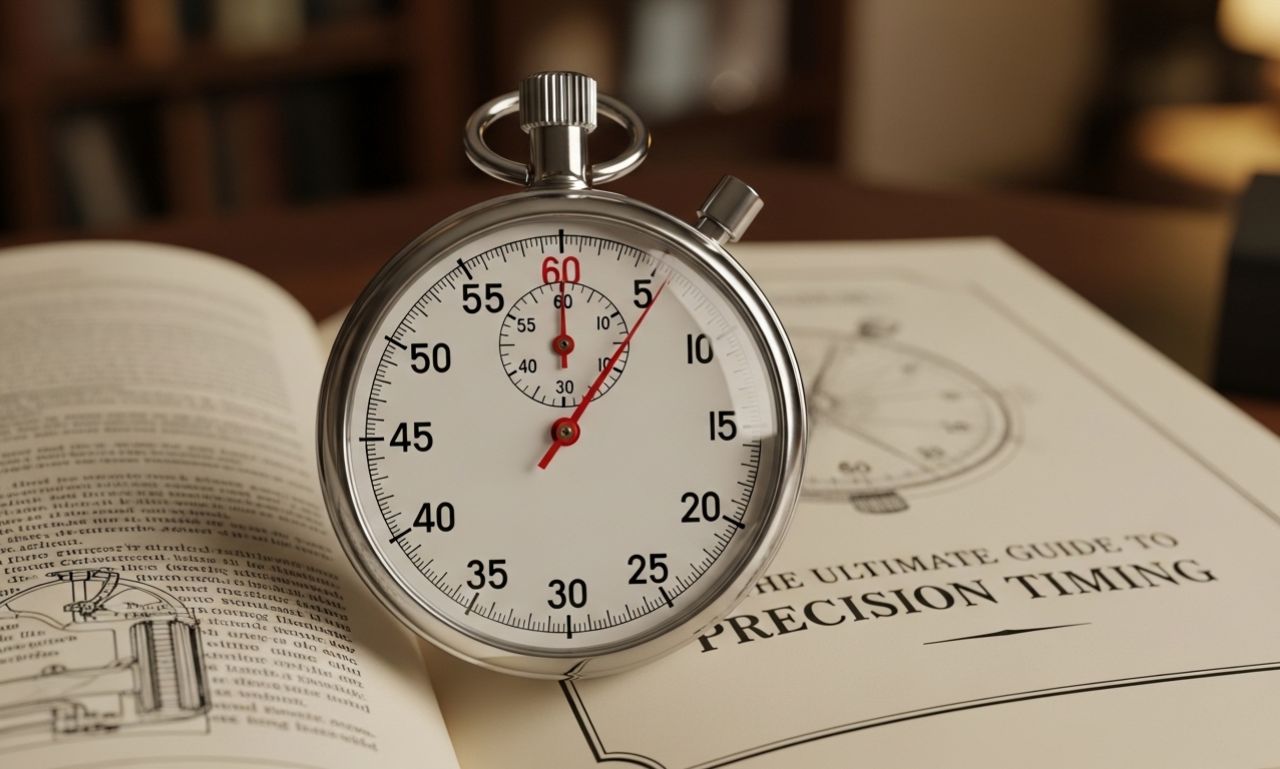
A stopwatch is a handheld or digital device designed to measure time intervals with extreme accuracy. Unlike regular clocks, which display the current time, stopwatches are used to track durations, making them essential in sports, scientific experiments, and other timing-critical activities.
Stopwatches have evolved from simple mechanical devices to advanced digital tools with multiple features, including lap timing, split timing, and memory storage. Their precision and reliability make them indispensable for professionals and enthusiasts alike.
History of the Stopwatch
The concept of a stopwatch dates back to the 18th century, with early mechanical models developed to measure small increments of time. Key milestones in stopwatch history include:
-
1760s: Early mechanical stopwatches appear, using gears and springs to measure seconds.
-
20th Century: Wristwatch-style stopwatches become popular in sports.
-
Digital Revolution: Modern electronic stopwatches provide millisecond accuracy, memory recall, and multifunction capabilities.
This evolution demonstrates how timing technology has kept pace with increasing demands for precision in competitive and scientific fields.
Types of Stopwatches
Stopwatches can be categorized based on their design and technology:
-
Mechanical Stopwatches: Traditional models using gears and springs. They require manual winding and are often used in nostalgic or specialized contexts.
-
Digital Stopwatches: Electronic devices offering highly accurate time measurement, often with features like countdown timers, lap recording, and alarms.
-
Online or App-Based Stopwatches: Modern solutions available on smartphones or computers, useful for casual timing or quick measurements without carrying a physical device.
Each type offers unique benefits depending on the use case, from professional sports to casual everyday timing.
Uses of a Stopwatch
Stopwatches are versatile tools with applications across various domains:
-
Sports and Fitness: Used to measure race times, lap times, or workout intervals, ensuring fair competition and accurate performance tracking.
-
Science and Research: Essential in laboratories to measure reaction times, experiment durations, or time-sensitive processes.
-
Education: Teachers and students use stopwatches for classroom experiments, quizzes, or time management exercises.
-
Everyday Life: From cooking to productivity tracking, stopwatches help people manage tasks efficiently.
The precision of a stopwatch makes it invaluable wherever accurate timing is critical.
Features of Modern Stopwatches
Modern stop watches offer more than just start and stop functionality:
-
Lap and Split Timing: Track multiple segments of a race or task.
-
Countdown Timers: Count down from a specific time for exercises or presentations.
-
Memory Recall: Store previous timings for comparison and analysis.
-
Water Resistance: Useful for swimmers or outdoor activities.
-
Multiple Event Timing: Track several events simultaneously in competitive sports.
These features make stop watches flexible tools for professionals, athletes, and hobbyists alike.
Tips for Using a Stopwatch Effectively
-
Familiarize Yourself: Understand your stopwatch’s features before timing critical events.
-
Practice Precision: Start and stop at exactly the right moment to ensure accurate measurements.
-
Use Lap Timing: For races or repeated intervals, lap timing helps monitor performance over time.
-
Regular Maintenance: For mechanical stop watches, winding and cleaning maintain accuracy.
-
Digital Calibration: Ensure digital or app-based stop watches are synchronized with reliable time standards.
Following these tips ensures you get the most accurate results from your stopwatch.
Conclusion
The stopwatch is more than just a tool; it is a symbol of precision and efficiency. From sports arenas to scientific labs, its ability to measure exact time intervals has made it indispensable across countless fields. Whether using a mechanical, digital, or app-based stopwatch, mastering this tool enhances performance, accuracy, and productivity.