
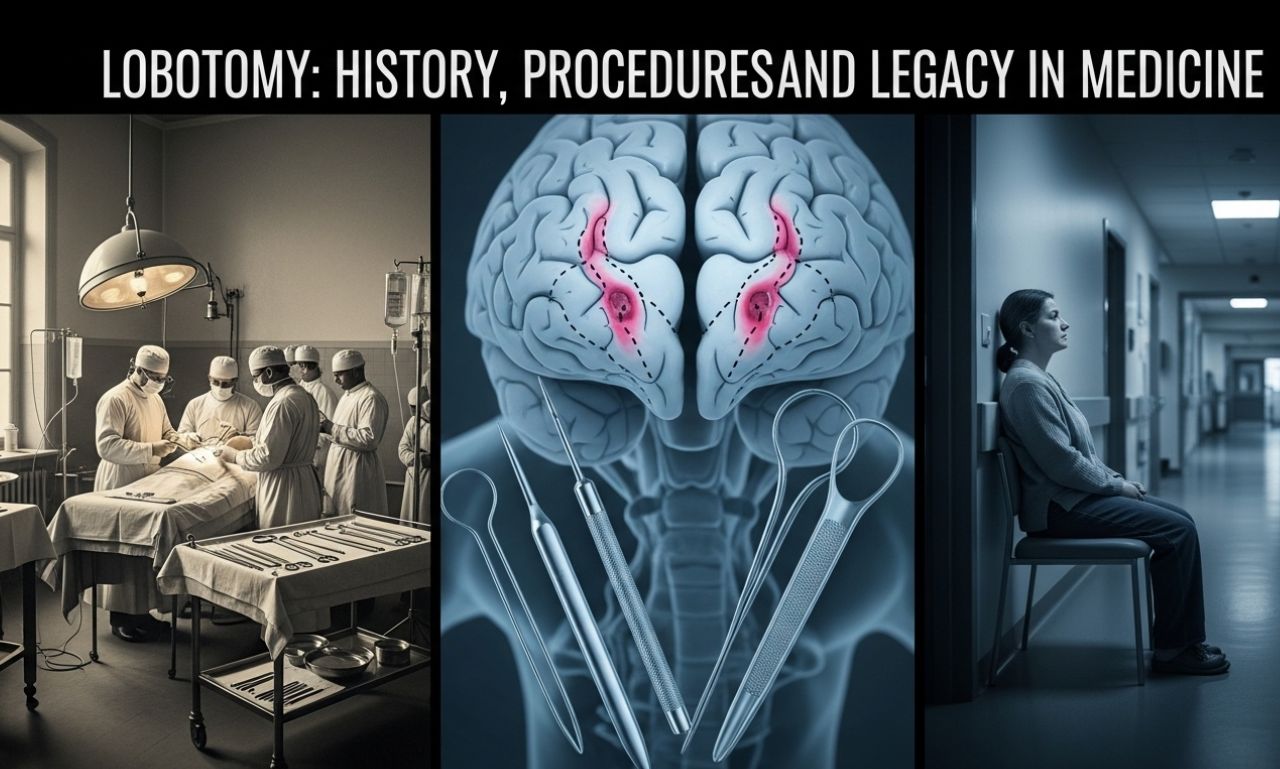
Lobotomy is a controversial and historically significant medical procedure that involved severing connections in the brain’s prefrontal cortex to treat mental illnesses. Once considered a breakthrough for psychiatric care, lobotomies are now largely discredited due to severe side effects and ethical concerns.
This article explores the history, methods, consequences, and enduring impact of lobotomy on mental health care.
What Is a Lobotomy?
A lobotomy, also called leucotomy, is a neurosurgical procedure intended to treat severe mental disorders, including schizophrenia, depression, and anxiety. The procedure involves cutting or scraping connections between the prefrontal cortex and other parts of the brain.
The goal was to reduce symptoms such as:
-
Severe anxiety or agitation
-
Hallucinations or delusions
-
Intense emotional disturbances
-
Aggressive behavior
While early practitioners believed lobotomy offered hope, the procedure often caused irreversible cognitive and personality changes.
History of Lobotomy
The history of lobotomy spans the early to mid-20th century:
-
1935 – Portuguese neurologist Egas Moniz developed the prefrontal leucotomy and later received the Nobel Prize in 1949.
-
1936 – Moniz’s procedure gained attention for treating psychosis.
-
1940s – American psychiatrist Walter Freeman popularized the transorbital lobotomy, known as the “ice pick” method.
-
1950s – Lobotomy reached peak popularity, with thousands performed in the United States and Europe.
-
1960s and 1970s – Lobotomies declined sharply due to the advent of psychiatric medications and growing ethical concerns.
Despite its historical use, lobotomy is now considered outdated and ethically problematic.
Methods of Lobotomy
Several techniques were used during the peak of lobotomy procedures:
1. Prefrontal Lobotomy
-
Involves surgically removing or severing tissue in the frontal lobes.
-
Requires drilling into the skull and cutting neural connections.
2. Transorbital Lobotomy
-
Introduced by Walter Freeman, using an instrument resembling an ice pick inserted through the eye socket.
-
Less invasive than prefrontal lobotomy, allowing the procedure to be performed outside operating rooms.
3. Leucotomy
-
A method focusing on severing white matter tracts in the frontal lobe.
-
Moniz used injections of alcohol or surgical tools to destroy targeted areas.
These procedures often caused profound changes in cognition, personality, and physical health.
Consequences and Side Effects
Lobotomy often had severe and irreversible effects:
-
Loss of initiative or motivation
-
Emotional flattening or apathy
-
Memory impairment or cognitive deficits
-
Seizures or infections
-
Death in some cases
While some patients experienced a reduction in extreme agitation, many suffered long-term disability or diminished quality of life.
Ethical Controversies
Lobot omy raised major ethical questions:
-
Consent Issues – Many patients did not fully understand the risks or were unable to consent.
-
Irreversibility – Permanent brain damage often outweighed potential benefits.
-
Medical Exploitation – Vulnerable populations, including women and institutionalized individuals, were disproportionately subjected to lobo tomy.
These concerns contributed to the procedure’s decline and spurred modern ethical standards in psychiatric treatment.
Lobotomy’s Decline
The decline of lobo tomy was influenced by several factors:
-
Psychiatric Medications – Introduction of antipsychotics like chlorpromazine in the 1950s reduced the need for surgical interventions.
-
Public Awareness – Media coverage and patient advocacy exposed the procedure’s harmful effects.
-
Medical Ethics – Evolving standards emphasized patient autonomy and non-invasive treatments.
By the 1970s, lobotomy was largely abandoned in favor of safer and more effective therapies.
Legacy of Lobotomy
Despite its dark history, lobo tomy influenced psychiatry in several ways:
-
Highlighted the need for scientific evaluation of psychiatric treatments.
-
Prompted advances in neuroethics and patient rights.
-
Inspired research into brain function, neurosurgery, and psychiatric disorders.
-
Served as a cautionary tale about the dangers of untested medical interventions.
Modern mental health care now emphasizes medication, psychotherapy, and evidence-based interventions rather than invasive brain surgery.
Conclusion
Lobot omy remains one of the most controversial procedures in medical history. Once hailed as a revolutionary treatment for severe mental illness, it is now remembered for its ethical failures and devastating side effects. Its legacy serves as a reminder of the importance of patient consent, ethical oversight, and rigorous scientific evaluation in medicine.
While lob otomy is a relic of the past, its story continues to influence modern psychiatry, neuroethics, and the ongoing quest to treat mental illness safely and effectively.