
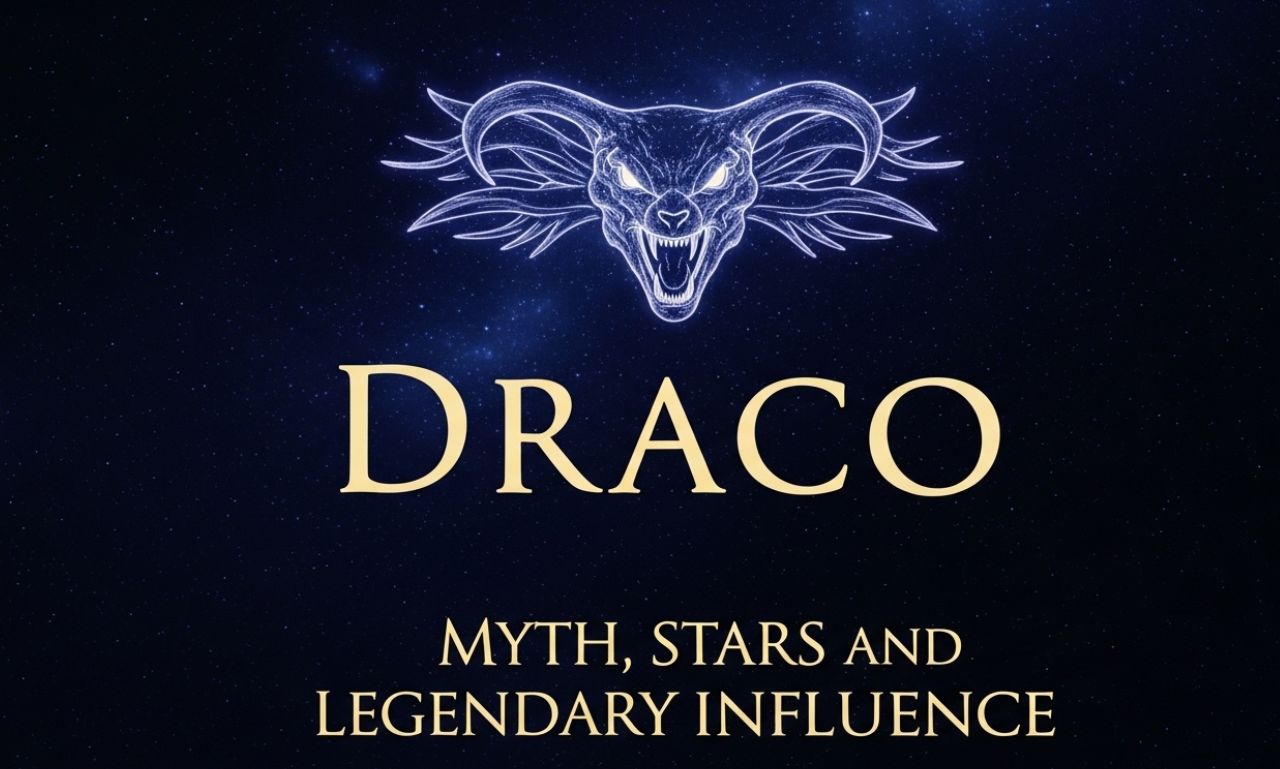
The name Draco evokes images of dragons, stars, and legendary figures. Its origin spans mythology, astronomy, and popular culture, making it a fascinating subject for study. In Greek, “Draco” means dragon, and this association has persisted in stories, constellations, and even modern fiction. From the ancient myths of Greece to the swirling stars of the Draco constellation, and from literature to video games, Draco symbolizes power, mystery, and the fantastical. This article explores the many facets of Draco, revealing its significance across different domains.
Draco in Greek Mythology
In Greek mythology, Draco is often depicted as a dragon or serpent. Its mythological stories are intertwined with tales of heroism, danger, and divine intervention.
The Dragon of Colchis
One of the most famous myths involving Draco is the dragon that guarded the golden fleece in Colchis. This dragon, said to never sleep, was ultimately outwitted by Jason and the Argonauts. The story of Draco symbolizes vigilance, strength, and the challenge of overcoming seemingly impossible obstacles.
Draco in Greek Constellations
The myth of Draco inspired one of the 88 recognized constellations. The Greeks imagined a celestial dragon coiled around the North Pole, forever guarding the treasures of the gods. This intertwining of myth and astronomy cemented Draco’s place in human imagination for centuries.
Draco the Constellation
Draco is one of the most notable constellations in the northern sky, spanning over 700 square degrees. It winds around the Little Dipper, making it easily identifiable for astronomers and stargazers.
Notable Stars in Draco
The Draco constellation contains several prominent stars:
-
Thuban (Alpha Draconis): Historically significant as the North Star around 2700 BCE.
-
Eltanin (Gamma Draconis): The brightest star in the constellation.
-
Rastaban (Beta Draconis): Another prominent giant star in Draco.
Deep-Sky Objects
Draco also hosts a variety of fascinating celestial objects, including planetary nebulae like the Cat’s Eye Nebula (NGC 6543) and multiple galaxies such as NGC 5866. These objects make Draco a favorite foramateur and professional astronomers alike.
Draco in Popular Culture
The allure of Draco extends beyond science and mythology into books, films, and games.
Literature and Movies
In the Harry Potter series, Draco Malfoy is a prominent character representing cunning, rivalry, and transformation. This modern interpretation gives the name a lasting presence in contemporary culture, resonating with readers and viewers worldwide.
Video Games and Animation
Dragons named Draco often appear in video games, cartoons, and animated films, reflecting the enduring fascination with dragons as creatures of power, magic, and wisdom.
Draco in Astrology and Symbolism
In astrology and symbolism, Draco carries associations with vigilance, wisdom, and cosmic balance. Its position around the North Pole in the sky gives it a symbolic role as a guardian or observer, representing protection and guidance. In some cultures, Draco is linked to dragons’ traditional traits: strength, mystery, and resilience.
Draco Across Cultures
Though Draco originates in Greek mythology, variations of dragon myths appear globally:
-
Chinese Mythology: Dragons symbolize luck, prosperity, and imperial authority.
-
Norse Legends: Serpentine creatures such as Jörmungandr share traits with Draco, guarding realms and causing cosmic tension.
-
Medieval Europe: Dragons became central figures in chivalric tales, echoing the vigilance and danger attributed to Draco.
These cross-cultural references highlight the universal fascination humans have had with dragon-like creatures across time and geography.
Observing Draco in the Night Sky
Draco is visible in most of the northern hemisphere throughout the year, making it a popular constellation for stargazing.
Best Viewing Times
-
Northern Hemisphere: Fall and winter months offer the clearest views.
-
Southern Hemisphere: Less visible but can be observed near the northern horizon.
Tips for Stargazing
-
Use a dark location away from city lights.
-
Binoculars or telescopes can reveal deep-sky objects like galaxies and nebulae.
-
Trace the dragon’s winding shape around the Little Dipper to locate stars like Thuban and Eltanin.
Fun Facts About Draco
-
Thuban, in Draco, was the North Star over 4,000 years ago.
-
Draco is one of the largest constellations in the northern sky.
-
The Cat’s Eye Nebula, found in Draco, is one of the most photographed planetary nebulae.
-
Draco has inspired characters in books, games, and movies for centuries.
-
Its name, meaning “dragon,” has remained consistent from ancient myths to modern entertainment.
Conclusion:
From ancient myths to celestial wonders and modern storytelling, Draco is a symbol of vigilance, creativity, and cosmic mystery. Its influence spans cultures, media, and disciplines, capturing the human imagination for thousands of years. Whether you are a stargazer tracing the coiled constellation in the night sky, a reader enjoying Harry Potter, or a mythology enthusiast exploring Greek legends, Draco represents a timeless connection between human creativity and the universe.