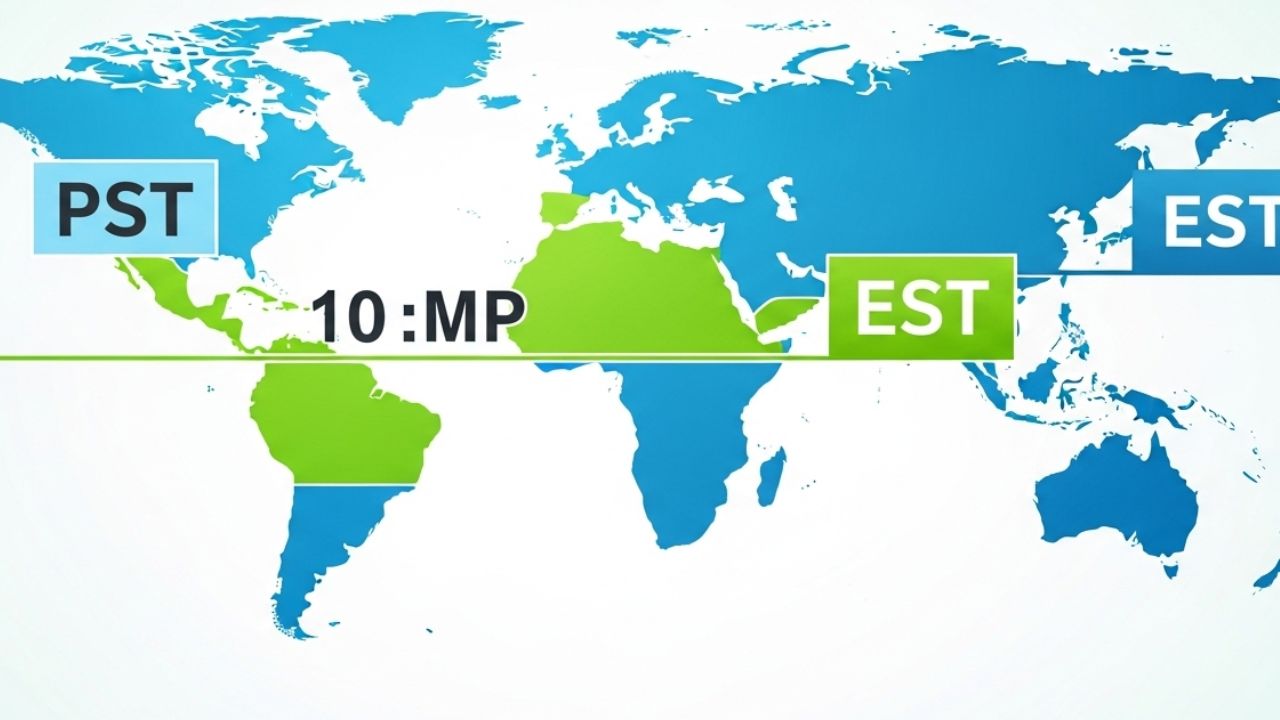
Understanding time and date in South Korea is essential for travelers, global business, communication across time zones, and cultural awareness. South Korea, officially the Republic of Korea, operates on a single national time standard all year round, without any daylight saving time adjustments. Whether you’re planning a trip to Seoul, attending international virtual meetings, or simply curious about how time is kept across the globe, knowing the time and date in South Korea helps you stay organized and connected. This article explains how the local time works, why it matters, and how it compares to other parts of the world.
What Is the Local Time and Date in South Korea
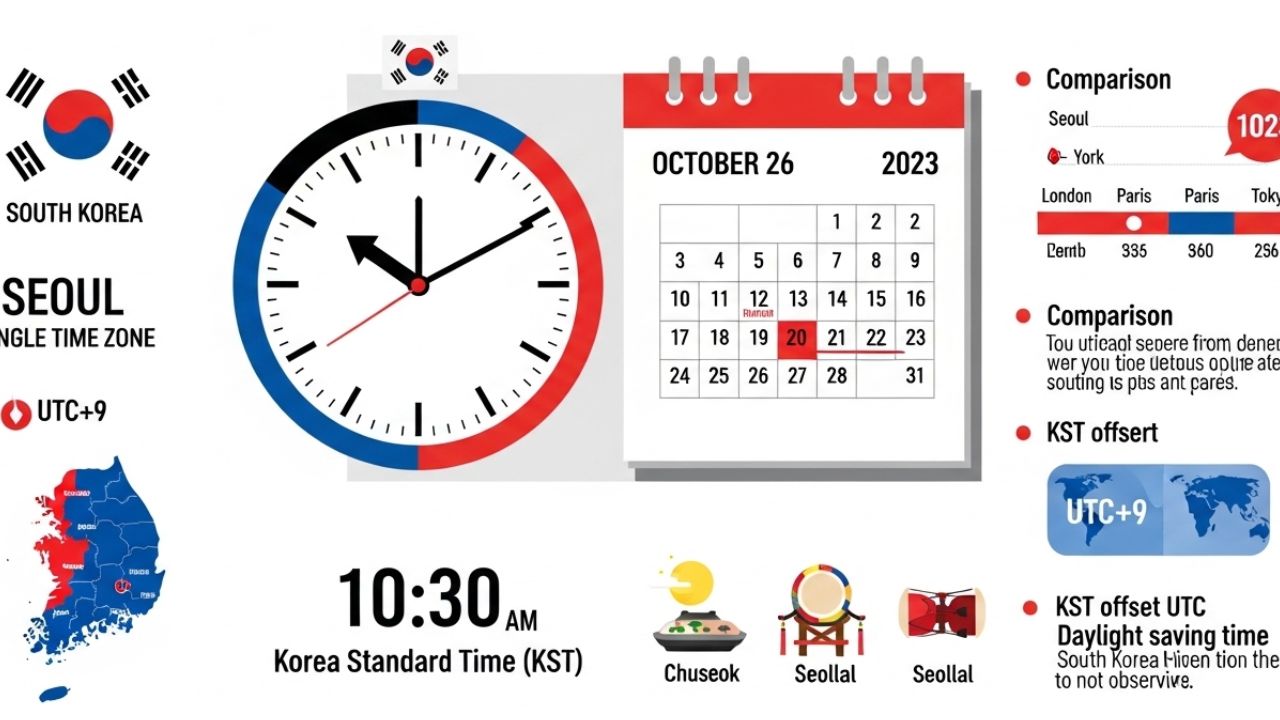
South Korea uses Korea Standard Time (KST), which is UTC +9 hours. That means the local clock is nine hours ahead of Coordinated Universal Time (UTC), the global time reference standard.
For example, if it’s 12:00 pm (noon) UTC, it will be 9:00 pm in South Korea on the same date. This means that someone in Seoul experiences their day earlier relative to many Western countries, which influences everything from business hours to international call planning.
All regions across the country — from capital city Seoul to Busan, Incheon, and Daegu — observe the same time and date simultaneously, making scheduling consistent without the complexities of multiple time zones.
Korea Standard Time Explained
What Is Korea Standard Time
The term Korea Standard Time (KST) refers to the official time zone used throughout South Korea. It has an offset of UTC +09:00, meaning it is nine hours ahead of the world’s baseline time reference.
Unlike some countries, South Korea does not observe daylight saving time (DST). This means that clocks remain the same throughout the year, with no spring forward or fall back changes that arecommon in regions such as Europe or North America.
How the Time Zone Affects Daily Life
The consistency of the time and date in South Korea simplifies many aspects of life, such as transportation schedules, television programming, schooling hours, and work routines. Since there are no seasonal clock changes, residents and visitors always know exactly how far ahead the local time is relative to UTC.
During vacation planning or international communication, it’s important to account for this nine‑hour difference. For example, when it’s morning in Europe, it could already be evening in South Korea. Awareness of this assists with planning business meetings, flights, and holiday activities.
How the Date Works in South Korea
The date in South Korea follows the familiar Gregorian calendar, the same system used by most of the world. This means the year is divided into 12 months — January through December — with leap years adding an extra day in February.
Knowing the time and date in South Korea is crucial when arranging international events, booking travel, or participating in live broadcasts that span different global regions. Because South Korea does not shift clocks forward or backward, the annual calendar stays consistent with international standards throughout the year.
Time Notation and How Dates Are Written
In South Korea, both 12‑hour and 24‑hour time formats are commonly used, depending on context. In spoken and informal situations, the 12‑hour clock (a.m./p.m.) is often used, while formal schedules such as transportation timetables, television guides, and flight information commonly use the 24‑hour format.
Regarding date notation, the Korean format typically places year first, followed by month and day, such as 2026년 4월 2일 — which translates to “April 2, 2026” in English ordering. This is often written as 2026.04.02 in numeric form.
Why Knowing the Time and Date in South Korea Matters
Travel and Visits
For travelers heading to South Korea, understanding the time and date helps with everything from adjusting your body clock to catching flights and checking into hotels on time. Jet lag is often influenced by unfamiliar time zones, and knowing that South Korea is UTC +9 helps you prepare and minimizetravel fatigue.
Business and Communication
South Korea is a major global economic hub, known for industries such as technology, automotive, entertainment, and education. If you are collaborating with people or organizations in South Korea, knowing the local time and date ensures you schedule meetings at suitable hours and respect local business hours.
Cultural Context
Cultural events, holidays, and traditional ceremonies all revolve around local calendars. National holidays such as Independence Movement Day or Children’s Day occur on fixed dates, and knowing the time and date helps in planning celebrations or understanding public closures.
Comparing South Korea’s Time With Other Regions
South Korea’s time and date differ from many other international time zones:
- Relative to UTC, South Korea is 9 hours ahead.
- Compared to Europe, South Korea can be 7–8 hours ahead depending on the country’s time zone.
- In contrast to the United States, South Korea is typically 13–17 hours ahead (depending on the U.S. zone).
This time difference affects how people coordinate work, calls, and flights. For example, a morning meeting in Seoul could be late evening of the previous day in New York or London. Awareness of this ensures smooth planning and avoids confusion.
Tips for Checking Time and Date in South Korea
Whether you are on a mobile device or desktop, you can check the time and date in South Korea easily with world clock apps, online time zone converters, or built‑in calendar functions. Popular tools like timeanddate.com and world clock features on smartphones let you compare local time in your region with Korean Standard Time instantly.
Conclusion
Understanding the time and date in South Korea is more than knowing a number on a clock — it connects you to global communication, cultural events, travel planning, and efficient coordination across regions. With Korea Standard Time fixed at UTC +9 and no daylight saving time changes, the schedule remains consistent throughout the year. Whether you’re a visitor, business professional, or time zone enthusiast, remembering how South Korea’s time and date work can help you stay punctual, informed, and prepared.