
Converting km to miles is an essential skill for travelers, students, athletes, and anyone dealing with distances in different measurement systems. Kilometers (km) are the standard unit of distance in most countries, while miles are commonly used in the United States and a few other regions. Understanding how to convert km to miles helps in navigation, exercise tracking, and international travel planning. This guide will cover the methods, formulas, and practical tips to accurately convert km to miles.
Why Convert Km to Miles?
Global Use of Kilometers and Miles
Most of the world uses the metric system, making kilometers the standard distance unit. In contrast, countries like the United States, the United Kingdom, and a few others use miles. Converting km to miles allows individuals to understand distances in local contexts and plan accordingly.
Everyday Applications
Converting km to miles is useful in many daily scenarios:
-
Travel and navigation
-
Running or cycling distance tracking
-
Vehicle fuel efficiency measurements
-
Scientific research and logistics
Knowing how to convert accurately ensures you avoid confusion and make precise calculations.
The Basic Formula to Convert Km to Miles
Standard Conversion Formula
The simplest way to convert km to miles is using the formula:
Miles = Kilometers × 0.621371
For example:
-
10 km × 0.621371 = 6.21371 miles
-
50 km × 0.621371 = 31.06855 miles
This formula provides a highly accurate conversion suitable for most purposes.
Approximate Conversion
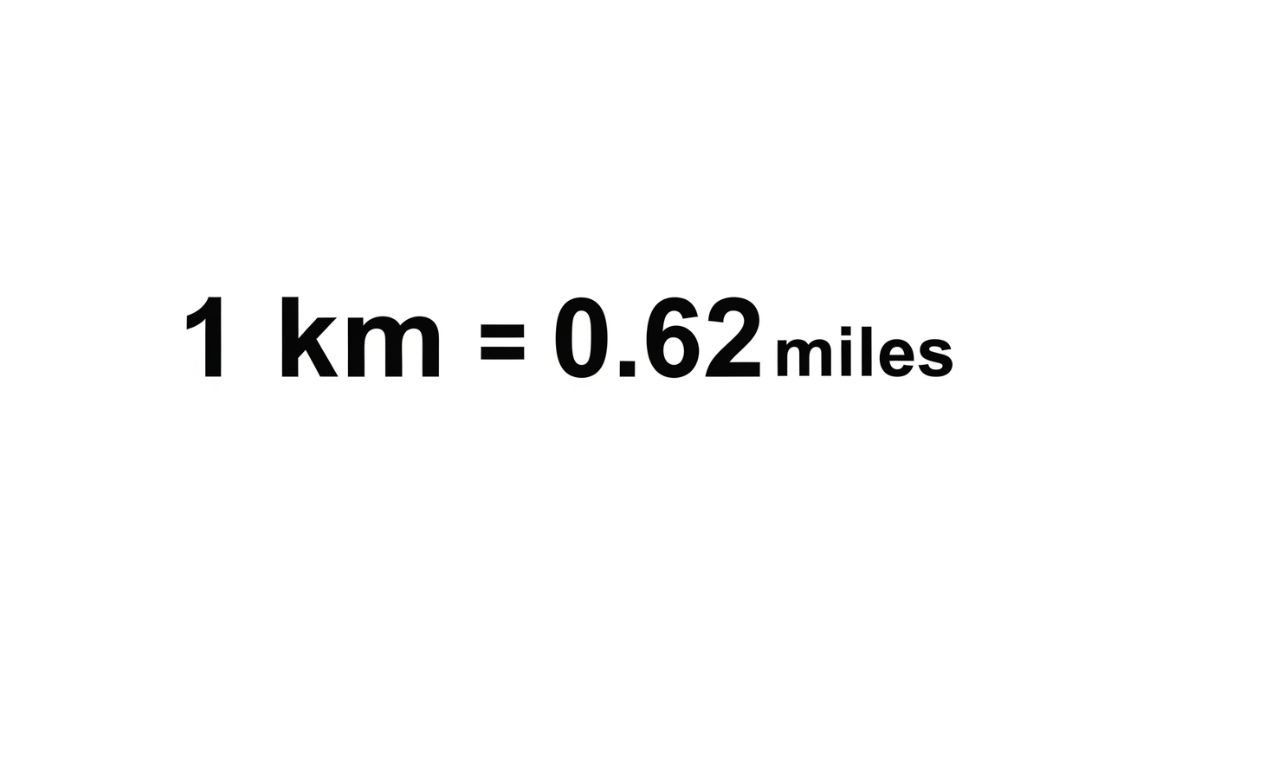
For quick estimates, you can use the simplified factor 1 km ≈ 0.62 miles. Although less precise, this method is useful for mental calculations and quick comparisons.
Step-by-Step Guide to Converting Km to Miles
Method 1: Using a Calculator
-
Multiply the distance in kilometers by 0.621371.
-
Round the result to the desired number of decimal places.
-
Record the converted distance in miles.
Example: 25 km → 25 × 0.621371 = 15.534275 miles → 15.53 miles
Method 2: Using Online Conversion Tools
There are numerous websites and apps that instantly convert km to miles. Simply enter the distance in kilometers, and the tool provides the equivalent in miles. This is particularly useful for longer distances or multiple conversions.
Method 3: Using Excel or Google Sheets
You can also convert km to miles in spreadsheets:
-
Enter the kilometers in a cell (e.g., A1).
-
In another cell, type
=A1*0.621371. -
Press Enter to get the result in miles.
This method is ideal for handling multiple distances at once.
Km to Miles Conversion Chart
Having a reference chart helps with quick conversions without calculations.
| Kilometers (km) | Miles (mi) |
|---|---|
| 1 | 0.62 |
| 5 | 3.11 |
| 10 | 6.21 |
| 20 | 12.43 |
| 50 | 31.07 |
| 100 | 62.14 |
| 200 | 124.27 |
Charts like this are useful for runners, travelers, and teachers.
Km to Miles in Practical Situations
Travel and Road Trips
When traveling abroad, converting km to miles can help you:
-
Understand road signs and speed limits
-
Estimate travel time more accurately
-
Compare distances between locations
Sports and Fitness
For runners and cyclists, tracking workouts may require converting km to miles, especially if training with international apps or for events in countries using different units.
Automotive Use
Fuel efficiency and odometer readings sometimes require conversion between km and miles. For example, 1 km per liter can be converted to miles per gallon using a combination of km-to-miles and liter-to-gallon conversions.
Common Mistakes to Avoid
Forgetting the Conversion Factor
Many people approximate 1 km = 1 mile, which is incorrect. Always use 0.621371 for accuracy.
Rounding Errors
Rounding too early in calculations can create inaccuracies, especially over long distances. Keep decimals until the final step.
Mixing Units
Ensure the units in your calculations are consistent. Don’t mix km, meters, and miles without proper conversions.
Tools and Apps for Km to Miles Conversion
Several tools make km to miles conversions simple:
-
Google Search (type “X km to miles”)
-
Conversion apps like Unit Converter, ConvertPad, or Metric Conversions
-
Fitness trackers (Strava, Garmin, Fitbit) that automatically switch units
Using these tools ensures quick, accurate results without manual calculations.
Conclusion:
Converting km to miles is an essential skill in travel, sports, automotive, and academic contexts. By understanding the formula, using tools, and practicing mental approximations, anyone can confidently work with both kilometers and miles. Whether for international travel, fitness tracking, or educational purposes, mastering km to miles conversion simplifies distance understanding and ensures accuracy in daily life.