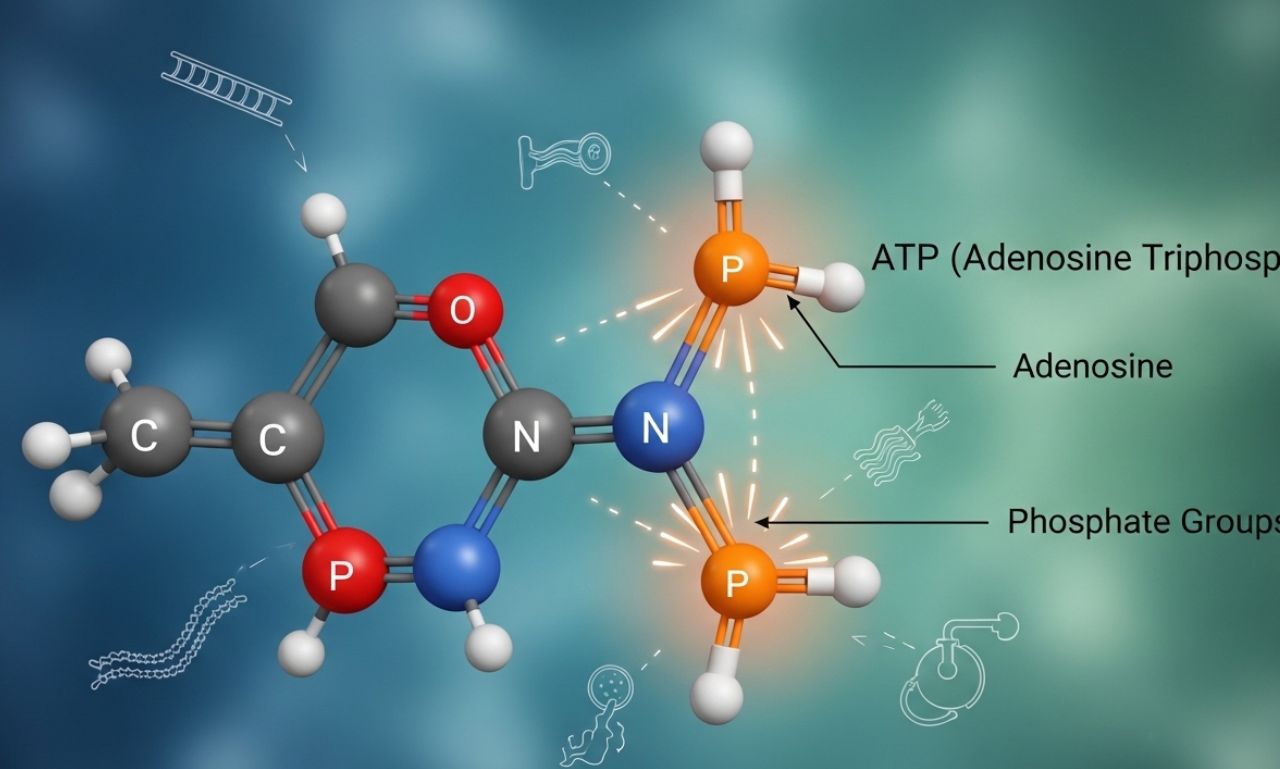
The term ATP stands for Adenosine Triphosphate, a molecule that serves as the primary energy currency in all living organisms. ATP is essential for powering cellular processes, enabling growth, movement, and biochemical reactions. Without ATP, cells—and therefore life itself—cannot function.
Understanding the meaning of ATP is fundamental in biology, medicine, and exercise science, as it explains how organisms convert food into usable energy.
What Does ATP Mean?
ATP (Adenosine Triphosphate) is a compound made up of:
-
Adenine – a nitrogenous base
-
Ribose – a five-carbon sugar
-
Three Phosphate Groups – linked in a chain
The bonds between the phosphate groups store energy. When ATP is broken down into ADP (Adenosine Diphosphate) and an inorganic phosphate, energy is released for the cell to use.
How ATP Works
ATP functions like a rechargeable battery for cells. The energy stored in the high-energy phosphate bonds is used for:
-
Muscle Contraction: Enables movement in animals and humans
-
Active Transport: Pumps molecules across cell membranes against a concentration gradient
-
Biosynthesis: Supports the creation of DNA, RNA, and proteins
-
Cell Signaling: Powers biochemical pathways that regulate cell functions
When ATP is consumed, it becomes ADP or AMP (Adenosine Monophosphate), which can be converted back into ATP through cellular respiration or photosynthesis in plants.
ATP in Cellular Respiration
Cells produce ATP primarily through cellular respiration, which occurs in three main stages:
-
Glycolysis: Glucose is broken down in the cytoplasm to produce a small amount of ATP.
-
Krebs Cycle (Citric Acid Cycle): Takes place in the mitochondria, generating electron carriers that produce more ATP.
-
Electron Transport Chain: Produces the majority of ATP by using electrons from food molecules to create a proton gradient that drives ATP synthesis.
This process ensures that cells have a continuous supply of energy to maintain life functions.
ATP in Muscle Activity
ATP is particularly important in muscles:
-
Short-term energy: Muscles use stored ATP for immediate movements lasting a few seconds.
-
Creatine Phosphate System: Regenerates ATP quickly during high-intensity, short-duration exercise.
-
Aerobic Respiration: Sustains ATP production for prolonged activities like running or swimming.
Without ATP, muscles would not contract, and movement would be impossible.
Other Meanings of ATP
While ATP primarily refers to Adenosine Triphosphate in biology, it has other meanings in different contexts:
| Context | Meaning |
|---|---|
| Sports | Association of Tennis Professionals (tennis governing body) |
| Technology | Advanced Technology Program |
| Business | Authorization to Proceed |
However, in science and medicine, ATP almost always refers to the energy molecule.
Importance of ATP
ATP is vital because it:
-
Powers almost all cellular functions
-
Supports life in all living organisms
-
Enables growth, repair, and maintenance of cells
-
Links metabolism and energy use in the body
Without ATP, cells cannot perform essential functions, leading to cell death and, ultimately, organismal death.
Conclusion
The meaning of ATP—Adenosine Triphosphate—is central to understanding life itself. As the energy currency of the cell, ATP enables movement, growth, and countless biochemical reactions necessary for survival. Whether in human muscles, plant cells, or microorganisms, ATP is indispensable.
By grasping the role and function of ATP, students, researchers, and fitness enthusiasts alike can better appreciate how energy flows through living systems.