
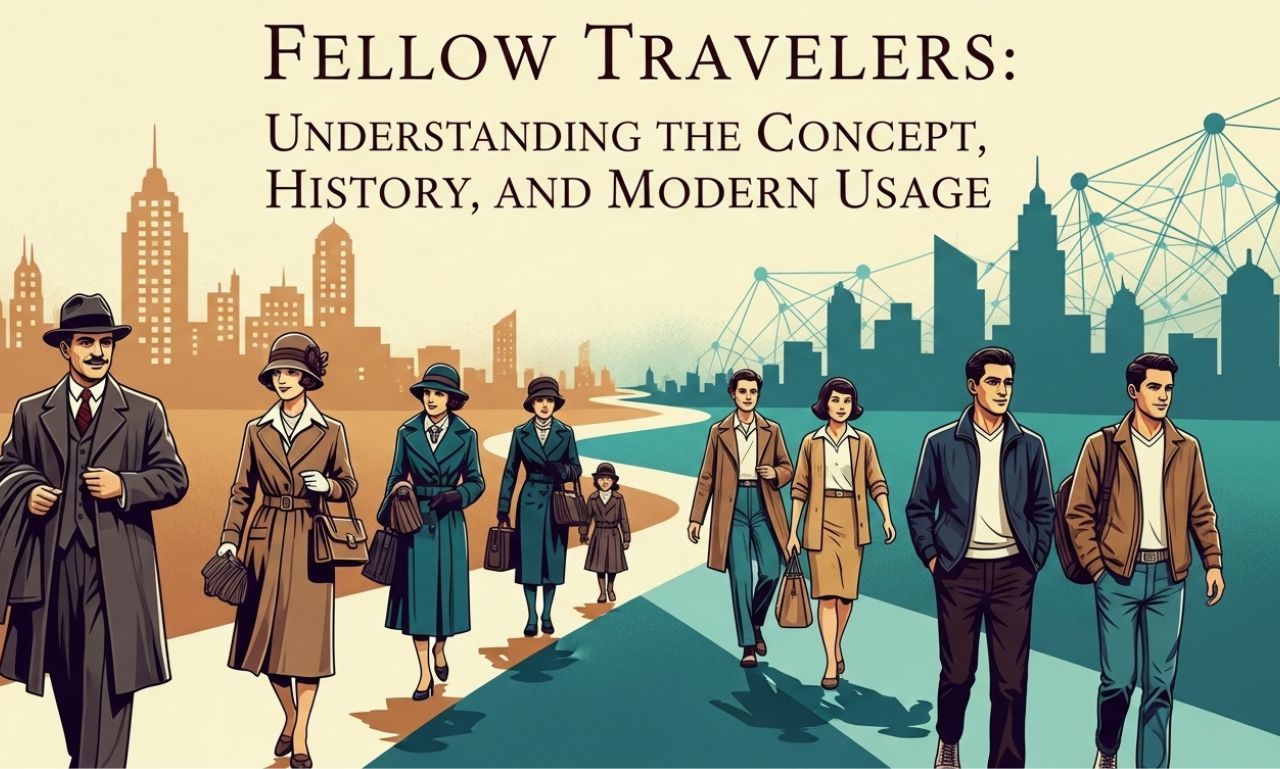
The term fellow travelers has both historical and contemporary significance, often used to describe individuals who, while not formally part of a movement or organization, sympathize with its goals or ideology. Historically, it gained prominence in political discourse, particularly during the 20th century, but today it can refer to social, cultural, or ideological allies in a broader sense.
Understanding the concept of fellow travelers provides insight into politics, activism, and social movements, as well as the role of indirect support in shaping history and society.
Etymology and Definition
The phrase fellow traveler comes from the literal idea of someone traveling alongside a group. In political contexts, it refers to a person who:
-
Shares the goals or sympathies of a political party or movement.
-
Does not formally belong to the organization.
-
Supports indirectly, often through advocacy, writing, or public statements.
The term has roots in early 20th-century politics but has since expanded metaphorically to other spheres of social or cultural influence.
Historical Context
Political Usage
The term gained prominence during the Cold War era, especially in the United States. Fellow travelers were often used to describe individuals who sympathized with communist ideals or the Soviet Union without formally joining the Communist Party.
Characteristics of political fellow travelers included:
-
Supporting socialist policies or reforms.
-
Associating with intellectual circles that debated Marxist ideas.
-
Writing, speaking, or creating art that aligned with leftist ideology.
Governments, media, and political groups often scrutinized fellow travelers, as their indirect support was seen as influential yet hard to regulate.
Cultural and Artistic Circles
Fellow travelers were also prominent in cultural communities:
-
Writers, poets, and artists sometimes supported political movements through their work.
-
They used their platforms to advocate for social justice, labor rights, or anti-fascist causes.
-
While not members of political organizations, their influence helped normalize certain ideas.
Famous examples include European intellectuals in the 1930s and American artists in the mid-20th century who were sympathetic to leftist causes.
Fellow Travelers in Modern Usage
Today, the concept has expanded beyond politics to include:
-
Social movements: Individuals who advocate for environmental, social, or human rights causes without being formal members of organizations.
-
Cultural movements: Supporters of artistic, literary, or musical movements who promote ideas through influence rather than membership.
-
Online activism: People who endorse online communities, campaigns, or ideologies indirectly by sharing content, engaging in discussions, or raising awareness.
In essence, fellow travelers today are individuals who amplify a cause or ideology while remaining independent from formal structures.
Characteristics of Fellow Travelers
-
Sympathy Without Formal Affiliation – They agree with the goals but are not official members.
-
Indirect Influence – Their impact comes through public discourse, art, media, or social platforms.
-
Flexibility – Unlike formal members, they can change allegiances or adopt nuanced positions.
-
Visibility – Some are prominent intellectuals, writers, or influencers; others are everyday citizens quietly advocating for causes.
Examples of Fellow Travelers
Historical Examples
-
American intellectuals during the 1930s-1950s who supported socialist ideals without joining the Communist Party.
-
European writers in the interwar period who sympathized with anti-fascist causes but remained independent.
Modern Examples
-
Environmental activists who promote climate initiatives but are not part of NGOs.
-
Social media influencers who raise awareness of humanitarian crises without formal affiliations.
-
Artists whose work aligns with social justice movements.
These examples highlight the enduring role of fellow travelers in shaping public opinion and social change.
Criticism and Controversy
The role of fellow travelers has not been without debate:
-
Political suspicion: During the Cold War, fellow travelers were often accused of subversion or disloyalty.
-
Ambiguity of loyalty: Critics argue that indirect support can mask hidden agendas or opportunism.
-
Impact measurement: The influence of fellow travelers is difficult to quantify, making their role controversial in both historical and modern contexts.
Despite these criticisms, fellow travelers often provide a bridge between formal organizations and the broader public, making their contributions significant.
The Role of Fellow Travelers in Social Change
Fellow tra velers often serve as catalysts for ideas to spread beyond formal institutions. Their influence includes:
-
Introducing ideas to mainstream audiences.
-
Bridging gaps between formal movements and everyday citizens.
-
Using cultural, artistic, or digital platforms to advocate for causes.
Their independent position allows them to innovate, adapt, and respond to societal changes more flexibly than formal members.
Conclusion
Fe llow trave lers are individuals who support, sympathize with, or promote causes without formally joining an organization. Historically tied to political movements like communism or socialism, the term now encompasses supporters of social, cultural, and ideological movements in various contexts.
Whether through activism, art, writing, or digital engagement, fello w travelers continue to influence public discourse, shape ideas, and amplify movements in ways that formal structures alone cannot achieve. Understanding their role highlights the power of indirect support and the importance of independent voices in shaping history and society.