
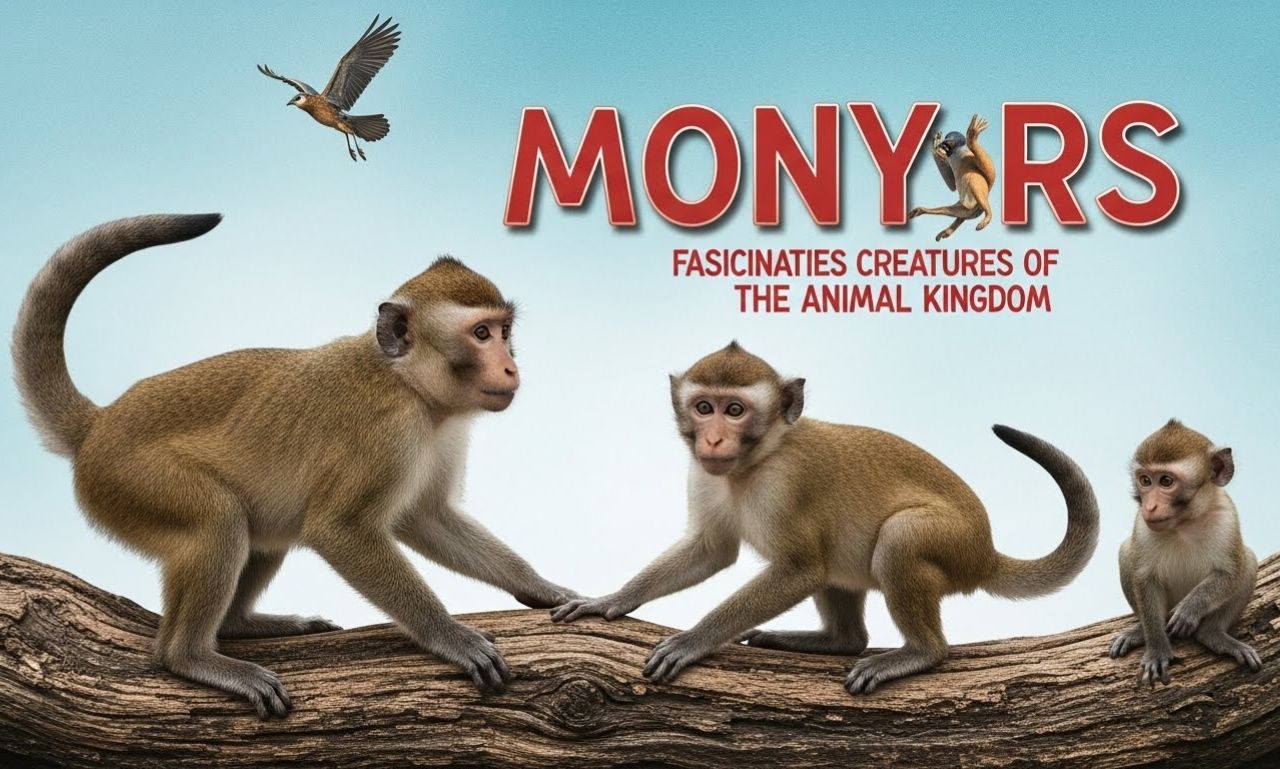
Monkeys are some of the most intelligent and social creatures in the animal kingdom. Belonging to the primate order, monkeys are known for their agility, curiosity, and complex social behavior. They inhabit various regions across the world, particularly in tropical forests, savannas, and mountainous areas.
This article explores the fascinating world of monkeys, including their types, behavior, habitat, diet, and importance in ecosystems and human culture.
What Are Monkeys?
Monkeys are primates that are generally divided into two main groups: New World monkeys and Old World monkeys.
-
New World Monkeys are found in Central and South America. They usually have prehensile tails that help them grasp branches. Examples include spider monkeys, howler monkeys, and capuchins.
-
Old World Monkeys live in Africa and Asia. They have non-prehensile tails, often show greater body size, and include baboons, macaques, and mandrills.
Monkeys are highly adaptable and can live in dense forests, savannas, and even urban environments. Their intelligence, social structure, and ability to use tools make them unique among mammals.
Physical Characteristics of Monkeys
Monkeys vary widely in size, color, and physical features:
-
Size: They range from small marmosets weighing less than 200 grams to large mandrills weighing over 30 kilograms.
-
Tail: Many monkeys have long tails; New World monkeys often have prehensile tails for climbing.
-
Limbs: Strong, flexible limbs allow them to swing, climb, and leap with ease.
-
Facial Features: Expressive faces help in communication and social interactions within the troop.
Their physical adaptations make them well-suited for arboreal life and complex social behaviors.
Behavior and Social Structure
Monkeys are social animals that live in groups called troops, which can range from a few individuals to over 100 members. Their social hierarchy is often complex, with dominant males or females leading the group.
-
Communication: Monkeys use vocalizations, facial expressions, and body language to communicate. Alarm calls warn of predators, while gestures maintain social bonds.
-
Grooming: Social grooming is a key activity that strengthens relationships and reduces tension within troops.
-
Play: Young monkeys engage in play to develop physical skills and learn social norms.
Social interaction is crucial for survival, protection, and reproduction in monkey communities.
Diet and Feeding Habits
Monkeys are mostly omnivorous, eating a wide variety of foods depending on their habitat:
-
Fruits and Seeds: The primary diet for most species, providing essential vitamins and energy.
-
Leaves and Flowers: Especially for folivorous mon keys like colobus mon keys.
-
Insects and Small Animals: Protein sources for omnivorous species such as macaques and capuchins.
-
Human Food: In urban areas, mon keys sometimes scavenge from human settlements.
Their dietary flexibility helps them survive in diverse ecosystems.
Habitat and Distribution
Mon keys are widely distributed across tropical regions:
-
Central and South America: Home to New World mon keys like howler mon keys and capuchins.
-
Africa: Home to baboons, colobus mon keys, and vervet mon keys.
-
Asia: Includes macaques, langurs, and gibbons in forests, mountains, and urban areas.
Habitat loss due to deforestation, agriculture, and urbanization poses a significant threat to many monkey species.
Reproduction and Lifespan
Mon keys reproduce sexually, with most species having one offspring at a time.
-
Gestation: Ranges from 4 to 8 months depending on species.
-
Parental Care: Mothers provide intensive care, while fathers and other troop members may assist in some species.
-
Lifespan: Smaller mon keys may live 10–20 years, while larger species can live up to 40 years in captivity.
Social structures and parental care are critical for the survival of young mon keys.
Importance of Monkeys in Ecosystems
Mon keys play vital roles in their ecosystems:
-
Seed Dispersal: By consuming fruits and excreting seeds, mon keys help maintain forest diversity.
-
Predator-Prey Balance: Mon keys are prey for larger predators and help maintain ecological balance.
-
Scientific Research: Mon keys are used in behavioral and medical studies due to their genetic similarity to humans.
Their presence indicates healthy ecosystems and biodiversity.
Monkeys and Human Culture
Mon keys have long fascinated humans and appear in mythology, religion, and folklore:
-
Hinduism: The monkey god Hanuman is a symbol of strength and devotion.
-
Chinese Culture: Mon keys represent intelligence and agility, often celebrated in folklore.
-
Entertainment and Research: Mon keys appear in movies, literature, and scientific studies.
While admired for their intelligence and playfulness, interactions with humans can sometimes lead to conflicts.
Conservation Status
Many monkey species are threatened due to:
-
Habitat Loss: Deforestation and agriculture reduce natural living areas.
-
Hunting and Poaching: Some species are hunted for food or illegal pet trade.
-
Climate Change: Alters food availability and habitat conditions.
Conservation efforts include protected areas, wildlife sanctuaries, anti-poaching laws, and awareness programs to ensure their survival.
Conclusion
Mon keys are intelligent, social, and adaptable primates that play essential roles in ecosystems and human culture. From their complex social behavior to their dietary flexibility, they continue to intrigue scientists and animal lovers alike. Protecting monkey populations and their habitats is crucial to maintaining biodiversity and ecological balance.
By understanding their behavior, habitat, and needs, humans can coexist responsibly with these fascinating creatures.